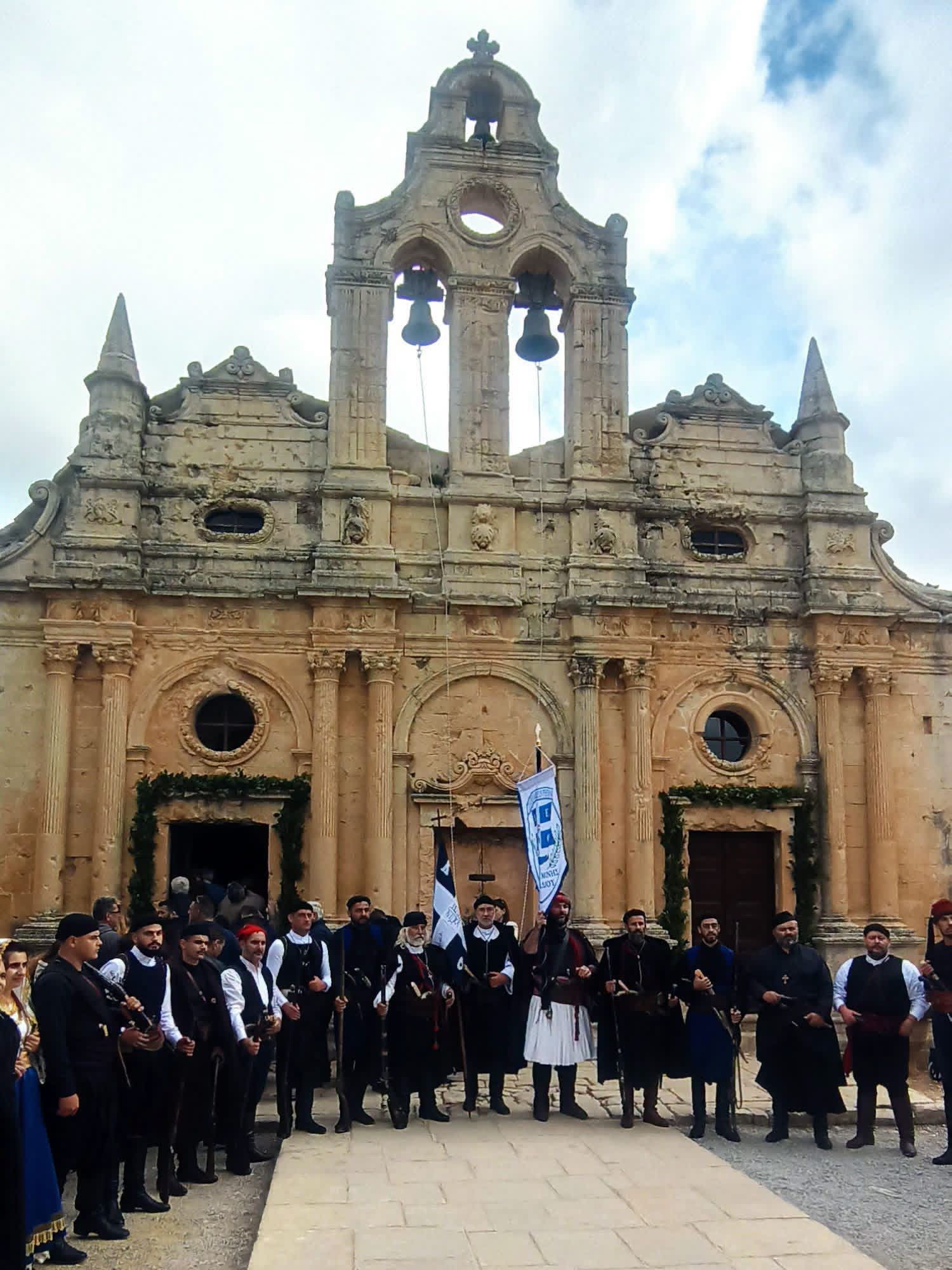
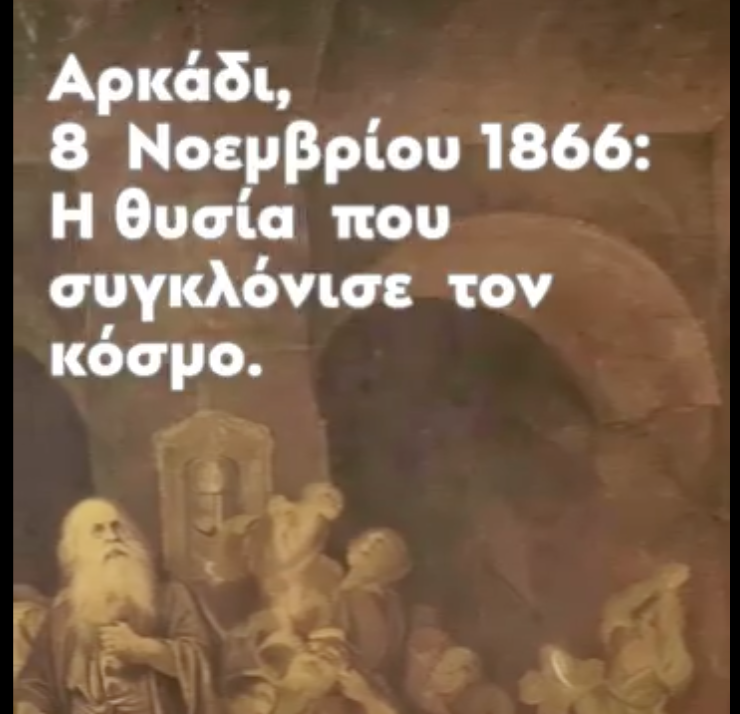
Arkadi Monastery, Rethymno – Today, 8th November 2026, marks the 160th anniversary of the Arkadi Monastery Holocaust, a pivotal event in Cretan history that stands as a global symbol of freedom and resistance.
“Arkadi remains a timeless, global symbol of freedom and human dignity.”
Today , 8th November, Rethymno marks its most significant historical commemoration, a solemn and deeply moving milestone: the 160th anniversary of the Holocaust of Arkadi.
The 8th November carries a double significance for the monastery ARKADI, located near the village Amnatos, east of Rethymno.
This date marks the historic explosion (1866), but it is also the Feast Day of the Archangels Michael and Gabriel, the patron saints of the monastery’s right transept.
The commemoration highlights the tragic, yet inspiring events of 1866, when approximately 964 Cretans – including 259 armed rebels and over 700 women and children – barricaded themselves inside the Venetian-era walls to escape the advancing forces of the Ottoman Empire.
Historical Significance & Commemorations
The 1866 Tragedy: Around 964 people (mostly unarmed women and children) sought refuge within the fortified monastery walls from an overwhelming Ottoman army.
Rather than surrender, the defenders, women, and children sheltering inside chose to blow up the monastery’s gunpowder magazine. When the defenses breached on November 8, resistance fighter Kostis Giaboudakis, following the Abbot’s orders, ignited the gunpowder room. This ultimate sacrifice drew global attention and sympathy from Europe, paving the way for Crete’s eventual liberation.
Origins of the ARKADI Monastery
While the explosion of 1866 immortalized the monastery globally, its roots stretch back much deeper into Byzantine and Renaissance history.
- Origins and Architecture: Though local legends attribute its founding to the Byzantine Emperor Arkadios in the 12th century, historical evidence points to its establishment around the 14th century. The striking Catholicon (main church) features a unique, highly influential Baroque and Venetian Renaissance facade built in 1587. This architectural style stands as a testament to the Venetian cultural influence on Crete before the Ottoman conquest.
- A Center of Intellectual Wealth:
Long before the revolution, Arkadi was a thriving monastery famous for its scriptorium (handwritten manuscript workshop). Monks copied rare texts, embroidered exquisite gold-threaded vestments, and gathered a massive library, making it an intellectual beacon for the island. - The Global Impact of the Holocaust: The self-sacrifice of Abbot Gabriel, John Dimakopoulos, and the hundreds of families inside did not just echo through Crete—it shifted global politics.
The insurrection did not bring immediate liberation, yet, the devastating sacrifice captured international attention, drawing the support of prominent European intellectuals like Victor Hugo and ultimately altering the course of European diplomacy toward Cretan independence.
Sources:
https://www.arkadimonastery.gr
https://www.rethymno.guide/events
https://www businessdaily.gr