Cretan Jazz: History, Influences & Fusion Scene and Vlatos Concert Programme 2026
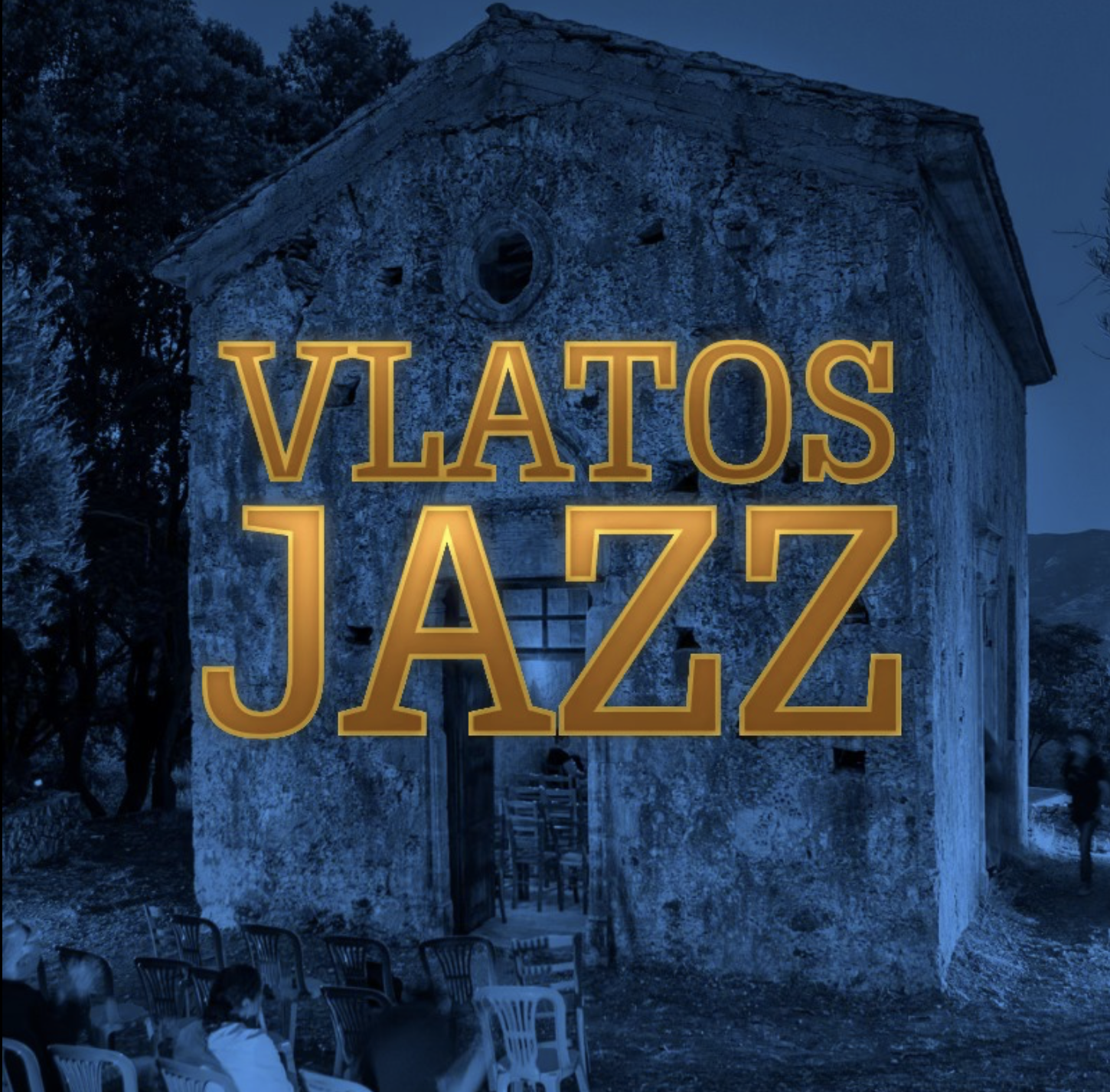
Cretan jazz is a vibrant, relatively modern fusion genre that blends the island’s deep-rooted traditional music with jazz improvisation, harmony, and freedom. It’s not an ancient tradition but has grown organically since the late 20th century, gaining real momentum in the 2010s–2020s. The Vlatos Jazz Festival perfectly embodies this scene: intimate, acoustic, candlelit performances in a 150-year-old stone church that deliberately mix international jazz with Cretan roots.
Traditional Cretan Music Foundations
Cretan music is one of the strongest living folk traditions in Europe:
Core instruments: Cretan lyra (3-stringed, violin-like, played vertically with a bow — the soul of the sound), laouto (long-necked lute), violin, mandolin, and percussion.
Styles: Rizitika (a cappella mountain songs), mantinades (improvised rhyming couplets), syrtos, sousta, and pentozali dances — often in 4/4 or free rhythmic feel with raw, expressive, modal melodies.
Historical influences: Ancient Greek & Byzantine roots + heavy Venetian (Italian) occupation (13th–17th centuries) brought violins, lutes, and Western scales; later Ottoman/Turkish elements added microtonal flavors and rhythmic complexity.
The music is highly emotional, storytelling-driven, and community-oriented — qualities that map naturally onto jazz.
The Birth & Growth of Cretan Jazz Fusion
1980s–1990s: Early experiments by local and foreign musicians (e.g., Ross Daly, an Irish multi-instrumentalist long based in Crete) who started blending Cretan lyra/violin with jazz, rock, and world music.
2000s onward: A dedicated fusion scene emerged. Musicians began treating traditional melodies (syrtos, kondylies) as heads for jazz improvisation, adding swing, modal harmony, and extended solos while keeping the acoustic, earthy Cretan spirit.
Key figure today: Maria Manousaki — violinist, composer, and curator of the Vlatos Jazz Festival. Her album Cretan Jazz Project (2018) is a landmark, reworking traditional Cretan tunes with jazz trio energy. She describes the fusion as completely natural because of her deep love for both Cretan heritage and jazz greats.
Other notable artists include Dimitri Vassilakis (saxophonist with Greek/Balkan-jazz projects), Eirini Tornesaki (vocalist blending jazz and traditional), and various trios/quartets that appear at Vlatos.
Why the Fusion Works So Well
Improvisation: Both Cretan music (especially mantinades) and jazz thrive on spontaneous creation.
Emotional intensity: Cretan playing is fiery and soulful; jazz adds harmonic depth and personal expression.
Acoustic purity: The Vlatos model (no amps, stone church acoustics, candlelight) highlights the raw timbre of lyra, violin, and voice — perfect for both traditions.
Cultural bridging: Venetian historical links make Italian/Mediterranean jazz influences feel native. Modern artists also draw from Balkan, Turkish, and Middle Eastern modal systems that overlap with Cretan scales.
Vlatos Jazz Festival as Living Expression
Since 2018, the festival has become one of the purest platforms for this fusion — deliberately acoustic, small-scale (~50 seats), and programmed with both straight-ahead jazz tributes (Bill Evans, Herbie Hancock, Chick Corea) and explicit Cretan-jazz crossovers (Maria Manousaki Quartet, local projects). It’s not background taverna music; it’s serious, listening-focused, and deeply tied to the mountain village atmosphere.
VLATOS MUSIC SUMMER 2026
Every Sunday evening, the historic stone church of Vlatos comes alive with the warm glow of candles and the intimate sound of live jazz and world music. Join for 14 unforgettable nights of music under the Cretan sky — an experience created for music lovers in western Crete.
(Source: Vlatos Jazz)
HOW to get tickets:
Get your tickets here online (contains also description of the music events 2026)
or cash at the venue.
How to get to VLATOS:
Vlatos Jazz, Epar.Od. Vlatos-Kameno Selinou, Vlatos (18 km south of Kissamos, on the road to Elafonisi.)
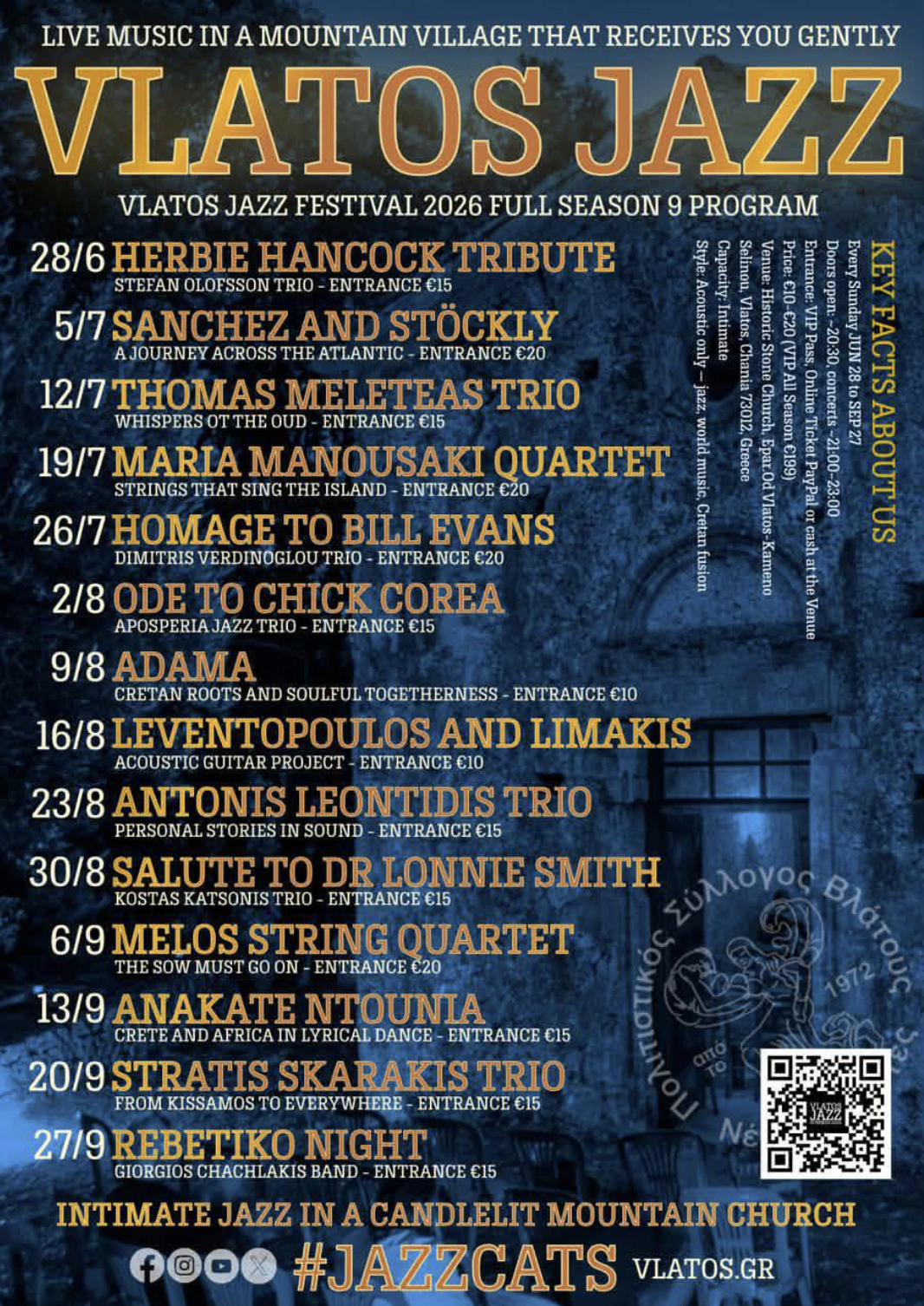
CONCERT PROGRAMME 2026:
Information about Vlatos, Innachorio – Kissamos:
https://www.vlatos.gr
Vlatos is on the road to Miliá, about a mile from the village. It is well worth exploring the area.
You might consider booking a room in Miliá eco-village, going for lunch at their excellent taverna, relaxing and then heading down for the concert in the evening.